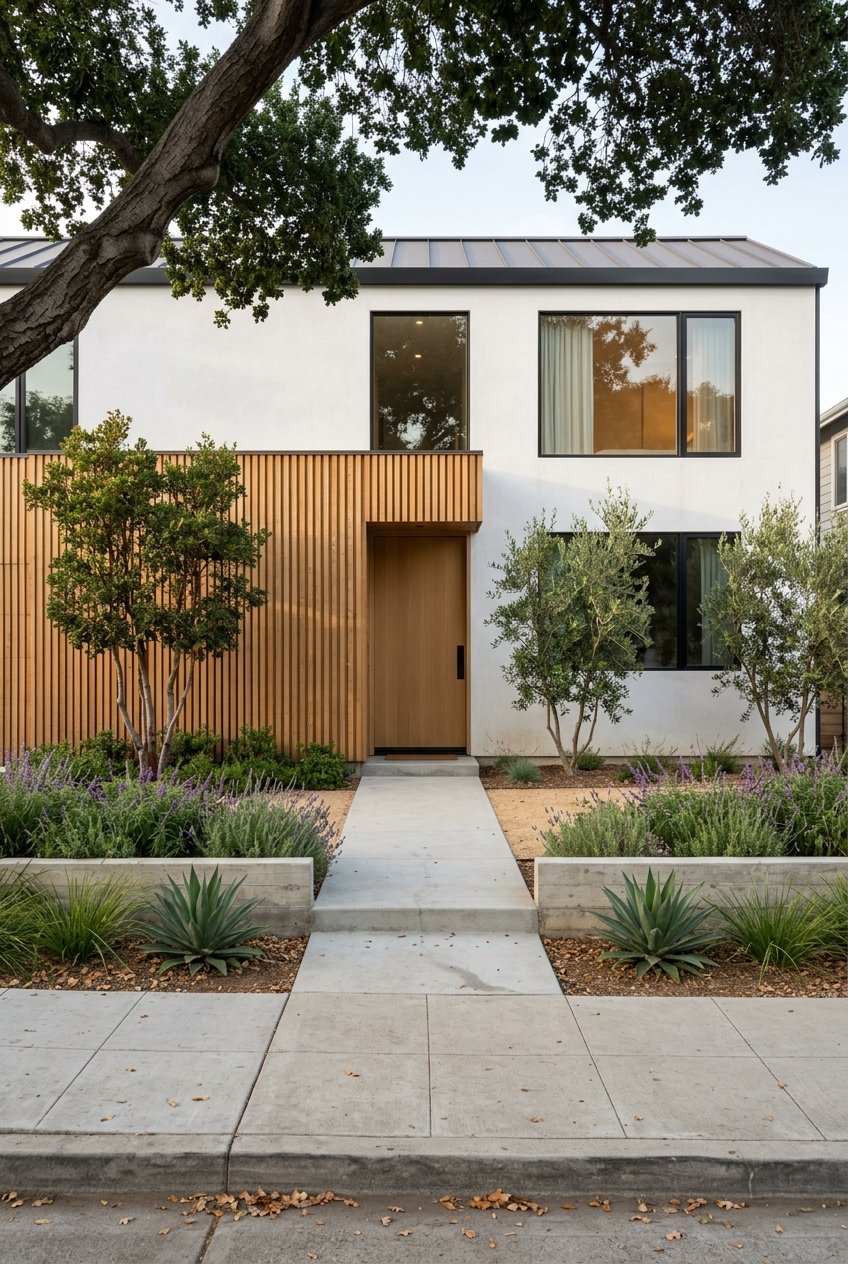
Redwood City Single-Family Neighborhoods Near Downtown
July 2, 2026
July 2, 2026
Looking for a Redwood City neighborhood where you can enjoy a true single-family home setting without feeling far from dining, events, and transit? That balance is one of Redwood City’s biggest strengths, especially if you want more space and a calmer street feel but still value being connected to Downtown. The key is to think of the city as a spectrum, with some neighborhoods leaning more suburban and others leaning more urban. Let’s dive in.
Redwood City is not just one thing. City planning documents describe a range that stretches from historic-influence, low-density neighborhoods like Edgewood Park and Mount Carmel to more urbanized areas like Palm and the downtown edge.
That matters when you are searching for a single-family neighborhood with an urban-suburban balance. You do not have to choose between quiet residential streets and access to daily conveniences. In Redwood City, many neighborhoods sit within a broader pattern that connects homes, amenities, and transit in a practical way.
Downtown Redwood City is the clearest reference point for the city’s urban side. According to the City, Downtown includes more than 75 restaurants, hundreds of retail and personal-services businesses, and a well-known entertainment district.
The city also hosts more than 100 city-sponsored events throughout the year, and Downtown regularly features concerts, movies, art, and watch parties at Courthouse Square. Caltrain places the Redwood City station in service of Downtown, and the city says the station is in the heart of Downtown, with Downtown Redwood City about one block west of the station.
For buyers, that means nearby single-family neighborhoods can feel residential without feeling cut off. The city’s support for Complete Streets and active transportation also helps explain why some areas feel connected to the urban core rather than isolated from it.
In Redwood City, the balance often comes down to lot size, street pattern, housing age, garage placement, and how close a neighborhood sits to Downtown. Larger lots, detached garages, curving streets, and more varied architecture often create a more spacious residential feel.
By contrast, smaller lots, attached garages, front-driveways, and a tighter street pattern can create a more urban feel, even within single-family areas. None of these traits are inherently better. They simply shape how a neighborhood lives day to day.
The city’s residential design materials help explain this clearly. Lots wider than 50 feet are concentrated mostly in Edgewood Park and hillside neighborhoods, while lots under 50 feet are generally found in places such as Palm, Central, Redwood Village, and Stambaugh-Heller.
If you want the most spacious, tree-lined single-family setting in this group, Edgewood Park is one of the strongest fits. City planning materials describe the Edgewood Park/Wellesley Park subdivision as having curvilinear streets, a small circular park, and a mix of architectural styles.
The same city materials group Edgewood Park with Mount Carmel as a historic-influence low-density area. The neighborhood is also noted for distinctive architecture, tree-lined streets, and green space.
For buyers comparing physical space, the lot data stands out. A city lot table puts Edgewood Park’s average single-family lot size at 10,627 square feet, which is well above the citywide average of 6,862 square feet.
That larger-lot pattern helps explain why Edgewood Park often feels more open and established. City design materials also note that detached garages are typical in older neighborhoods and large-lot areas, which adds to that classic residential character.
Edgewood Park can make sense if you are moving from a tighter setting and want a stronger sense of scale. You may appreciate larger lots, mature streetscapes, and a neighborhood feel that reads clearly residential.
At the same time, this part of Redwood City still fits into the city’s broader connected lifestyle. You can prioritize space and character without giving up the benefits of being in a city with a strong downtown core.
Mount Carmel is another strong match if you want a balanced lifestyle. The city describes it as an area with distinctive architecture, tree-lined streets, and green space connected to parks and nearby schools.
City materials also note that Mount Carmel is largely pre-World War II, with more than 40 percent of its housing stock built before World War II. That older housing stock often contributes to the neighborhood’s visual character and established feel.
From a lot-size standpoint, Mount Carmel sits in a middle ground. A city lot analysis places the average single-family lot size at 6,909 square feet, which is smaller than Edgewood Park but still slightly above the citywide average.
That combination gives Mount Carmel a useful balance for many buyers. It offers a traditional single-family setting with architectural interest and mature streets, while staying within Redwood City’s broader urban framework.
Compared with Edgewood Park, Mount Carmel may feel a bit less expansive by lot size. Compared with more compact neighborhoods closer to the urban edge, it still offers a comfortable residential scale.
If your goal is charm, established blocks, and a quieter feel without stepping too far from the action, Mount Carmel deserves a close look. It is often a practical middle option on the Redwood City spectrum.
Roosevelt tells a different part of the Redwood City story. The city’s general plan says the neighborhood is shaped by numerous single-family dwellings with landscaped front yards, a mix of one- and two-story homes, attached garages, and front-yard driveways.
The same planning language notes a modified grid with cul-de-sacs. Together, those details give Roosevelt a classic post-war suburban visual character.
Its average single-family lot size is 6,386 square feet, according to the city lot table. That places Roosevelt below the citywide average and below Mount Carmel, but still firmly within the single-family suburban side of the spectrum.
For many buyers, Roosevelt’s appeal is straightforward. If you like familiar post-war neighborhood patterns and a strong single-family identity, Roosevelt can offer that while still being part of Redwood City’s connected city fabric.
If your top priority is getting closer to Downtown while staying in a low-density single-family setting, the Sequoia area is especially worth noting. The city’s environmental analysis describes it as a neighborhood of traditional low-density single-family homes with mature tree-lined streets, front-yard setbacks, and sidewalks.
Its location just southwest of the Downtown Precise Plan area helps make the point of this blog. Redwood City can offer older residential streets very near the downtown core, even when the lots and homes may not feel as spacious as Edgewood Park or Mount Carmel.
For buyers who want an easier connection to restaurants, events, and the station area, Sequoia can represent one of the clearest examples of urban-suburban balance. It brings you close to the amenity core while preserving a recognizable single-family street pattern.
Palm Park is an official city neighborhood association, while city planning materials often discuss the broader Palm neighborhood. In those documents, Palm is described as nearly built out and urbanized, with one- to three-story residential buildings, prominent duplexes, two- to four-story apartment buildings, and numerous post-war single-family homes and duplexes with front yards.
Among the neighborhoods in this group, Palm leans most urban. The city’s residential design study places Palm among the neighborhoods with lots under 50 feet wide, and a city lot table gives Palm an average single-family lot size of 5,087 square feet.
That does not mean Palm is not worth considering if you want a single-family home. It means the neighborhood sits closer to the urban end of Redwood City’s continuum, where residential living and city scale meet more directly.
Palm may suit buyers who value proximity, convenience, and a more compact residential setting. If you want a single-family option but do not need the lot size or spatial feel of Edgewood Park, Palm can still fit the broader urban-suburban brief.
It is a good reminder that balance looks different from buyer to buyer. For some, it means large lots near the city. For others, it means living closer to the city’s energy in a smaller-footprint neighborhood.
Here is a simple way to think about the spectrum based on city descriptions and lot data:
| Neighborhood | General Feel | Avg. Single-Family Lot Size |
|---|---|---|
| Edgewood Park | Spacious, tree-lined, historic-influence | 10,627 sq ft |
| Mount Carmel | Established, charming, balanced | 6,909 sq ft |
| Roosevelt | Classic post-war suburban | 6,386 sq ft |
| Sequoia area | Downtown-adjacent single-family | Not specified in the report |
| Palm | Most urban-leaning in this group | 5,087 sq ft |
This is not a formal city ranking. It is a practical summary based on the city’s planning descriptions and lot-pattern data.
The best neighborhood for you depends on what “balance” really means in your daily life. If you want maximum space and a more expansive residential setting, Edgewood Park may rise to the top.
If you want architectural character and a calm neighborhood feel, Mount Carmel may be the stronger match. If you prefer a classic post-war layout, Roosevelt can be appealing.
If walkable access to Downtown matters most, Sequoia and parts of the downtown-adjacent area deserve serious attention. And if you are comfortable with a more compact, urban-leaning setting, Palm can offer a different version of the same Redwood City lifestyle.
In Redwood City, neighborhood feel is not just about distance from Downtown. It is also about the physical details that shape everyday living, such as lot width, setbacks, garage placement, landscaping, and street layout.
The city’s Residential Design Guide reinforces this idea by focusing on massing, setbacks, roof design, window placement, garage placement, and landscaping. Those elements influence whether a block feels open and traditional, compact and urban, or somewhere in between.
That is why a smart home search should look beyond a simple map pin. Two neighborhoods can both offer single-family homes, yet deliver very different daily experiences.
If you are weighing Redwood City neighborhoods and want a more strategic read on where your lifestyle fits best, Christopher Fling can help you compare options with clarity and a process-driven approach.
Stay up to date on the latest real estate trends.